
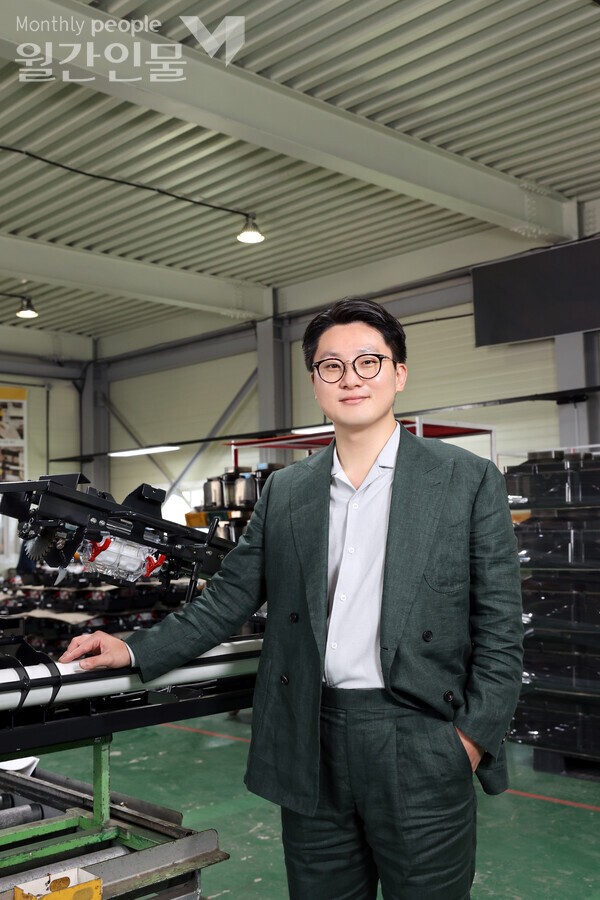
According to Statistics Korea, the proportion of the rural population aged 65 and older currently stands at 25.7%, and the proportion of elderly farmers, foresters, and fishermen is 2.6 times that of the total population. To make matters worse, rural areas are facing serious aging and labor shortages, with only about half of the workforce needed during the peak farming season. Hosan Vision Co., Ltd. proposes a solution to the agricultural crisis of rapid aging and labor shortages: “Data Agriculture.” Hosan Vision’s innovative products, which reduce farm labor and enhance agricultural quality and productivity, are strengthening the competitiveness of Korean agriculture.
Maximizing agricultural efficiency by presenting precision agriculture solutions that reflect the voices of farmers.
Hosan Vision, a purely domestic technology company providing precision agriculture solutions that integrate cutting-edge technologies like IT and AI, researches and develops advanced technologies for agriculture, Korea’s primary industry, and farmers. It has consistently pursued challenges and innovations to maximize agricultural efficiency and shape the future of the food industry. Founded in 2003 as Hosan Tech Co., Ltd., Hosan Vision’s history continued with a name change to Hosan Vision Co., Ltd. in 2022 and the second-generation management system led by CEO Park Beom-ho, who succeeded his father.
In 2007, when Japanese side-fertilizers dominated the market, Hosan Vision developed Korea’s first side-fertilizer for a riding rice transplanter. For the next 20 years, the company has been at the forefront of localizing agricultural equipment used in domestic farming, a sector that had previously relied on imported products. Its competitiveness and stability were recognized when it registered as a partner of Daedong Industrial in 2008, LS Mtron in 2009, and Dongyang Trading in 2010. In 2015, it established its own technology research center to strengthen its technological capabilities. This became the driving force behind the introduction of innovative agricultural machinery, including simultaneous rice transplanting pesticide sprayers (herbicides), motor-driven side-fertilizers, and variable-rate fertilizer spreaders. As of 2025, the domestic distribution of side-fertilizers will reach 16,000 units and herbicide sprayers 7,000 units.
“My father worked for a long time at a domestic agricultural machinery company. At the time, the company encouraged him to start his own business, and he developed agricultural machinery tailored to Korean conditions, based on Japanese technology that hadn’t yet been domestically produced. This initiative led to the launch of Korea’s first side-row fertilizer for a riding rice transplanter, and it still holds the number one market share.”
In April 2025, Hosan Vision introduced Korea’s first “rice transplanter-attached insecticide sprayer (seedling bed treatment sprayer).” Its unique feature is that it can simultaneously spray insecticides and fungicides onto the seedling bed during transplanting, minimizing both manual labor and pesticide loss. Users can adjust the spraying radius and pesticide amount from 1 to 27 levels with a single remote control, and precise control is possible in units of ±2g. Above all, it is even more meaningful because it reflects farmers’ long-standing demands for “first domestic production, eco-friendliness, and reduction of pesticide poisoning for farmers.” The rice transplanter-attached insecticide sprayer utilizes Hosan Vision’s developed ventilation transport technology, achieving the dual benefits of smooth pesticide spraying and reducing workers’ respiratory exposure.
Recently, we are participating in the Rural Development Administration’s “AI-based Nutrient Diagnosis-Optimal Fertilization Full-cycle Integrated Self-Propelled Variable Fertilizer Smart Package (hereinafter referred to as the Self-Propelled Variable Fertilizer Smart Package)” project, developing a soil sensor method suitable for domestic soil and soil texture environments. By precisely analyzing the sensed data using AI technology and applying the optimal amount of fertilizer, we are creating various added values, such as reducing damage to crops and the environment caused by excessive fertilizer application, improving economic efficiency, and realizing data-driven farming. Through this, we are achieving a shift from traditional farming, which relied on experience, to precision/data farming, thereby enhancing domestic technological capabilities. Specifically, CEO Park explained that they are participating in the development of a method for adjusting the optimal components and dosage for each soil composition through soil depth-based sample analysis, as well as the development of a suitable machine for this application. The goal is to develop next-generation precision farming technologies that will contribute to reducing rural labor and fertilizer usage.
With Japanese agricultural machinery accounting for over 30% of the market, domestic technology is poised to secure future agricultural competitiveness.
Currently, Japanese agricultural machinery accounts for 14.5% of the domestic market for tractors, 31.1% for combine harvesters, and 35.8% for rice transplanters. The share of foreign agricultural machinery is also steadily increasing. Meanwhile, the annual sales of the top four domestic agricultural machinery manufacturers are only about 10% of those of major Japanese manufacturers. Despite this, Hosan Vision’s side-row fertilizer spreader has firmly maintained its leading market share. This is the result of seven generations of evolution since its launch in 2007. CEO Park Beom-ho explained that the product is not only priced reasonably compared to Japanese products, but also reflects the needs of farmers through 20 years of communication with consumers. Following the establishment of a Chinese subsidiary in 2017, Hosan Vision entered the Chinese market, exporting hundreds of units annually and achieving $100,000 in exports of pesticide sprayers to China by 2023. The first domestically produced herbicide sprayer capable of simultaneously transplanting rice, also unveiled in 2023, is receiving enthusiastic responses both domestically and in China.
“Digital smart agriculture is a major driving force in the future of agriculture. If we lose the market to foreign products, domestic products will inevitably lose ground, even if it’s due to data compatibility issues. Believing that the future competitiveness of agriculture lies in data, we are reinvesting the funds we’ve accumulated to date and preparing for related fields.”
Park, a second-generation CEO, had been a businessman since before taking the helm at Hosan Vision. Having majored in electronic engineering, he developed and launched a product that incorporated batteries and motors into a noisy lawn mower, which garnered positive market response. However, as competition intensified, he decided to join Hosan Vision. Since then, he has worked in various roles, including assembly, sales, and development, gaining a comprehensive understanding of the company. Park says that while it wasn’t easy, he gained a comprehensive understanding of both production and sales. He also realized that since consumers invest their precious money in products, they need to develop products that provide practical benefits.
With CEO Park’s arrival, Hosan Vision’s direction has changed. From focusing on agricultural equipment design, the company has begun introducing a product line incorporating electronic control. This year, the company is expanding its business by incorporating IT. Recently, the company has entered the unmanned agricultural sector with the development of the autonomous driving solution “Compass.” Compass is a straight-line autonomous driving kit attached to rice transplanters and tractors, compatible with all types of tractors. By utilizing a GPS transmitter and a portable transmitter tower, the company has increased the number of satellites available, enhancing accuracy and communication stability. The company is building a strategic business portfolio with the goal of maximizing agricultural efficiency through a total precision rice farming solution.
“We started with precision fertilizer spraying machines, and have since expanded into developing fertilizers and providing solutions that extend beyond just machines to prescriptions. Based on our portfolio encompassing the entire range of agricultural equipment, including soil, environment, machinery, and chemicals, we offer solutions that ensure not only crop quality but also yield.”
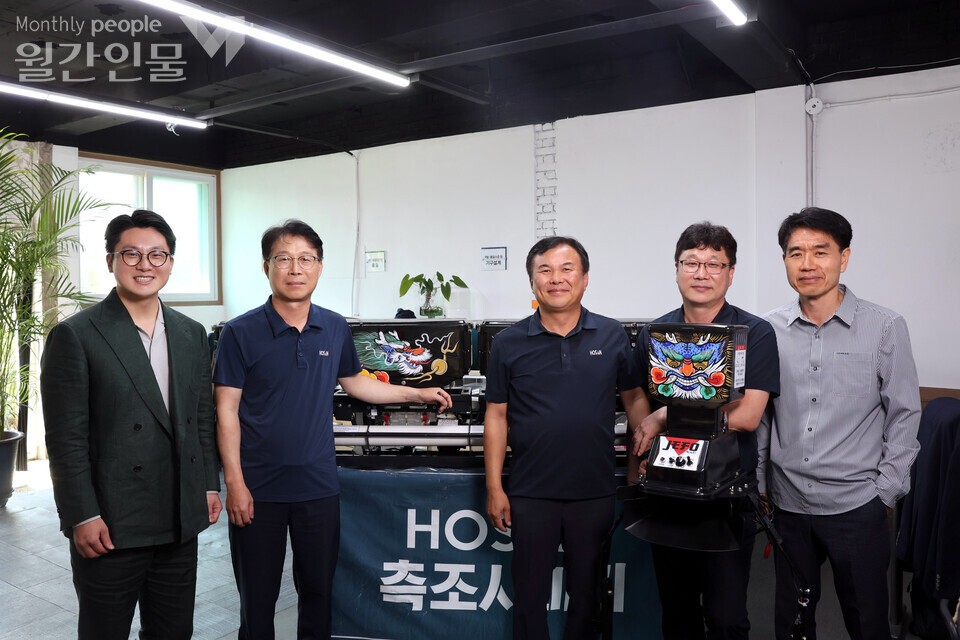
Hosan Vision has developed essential agricultural equipment through in-depth research ranging from basic science to conceptual design.
Spring is as hectic for Hosan Vision, which supplies the irrigation system, a key attachment for rice farming machinery. The months of April through June are a time of intense competition. From Gangwon Province, where early-maturing rice varieties are planted, to Jindo and Haenam, the southernmost tip of the country, rice must be planted on time to ensure a proper harvest, and Hosan Vision is on high alert. Local distributors and headquarters staff dedicate themselves to after-sales service, driven by the belief that equipment failures should not ruin the entire year’s harvest. Even equipment older than 15 years is eligible for after-sales service. To this end, one of the company’s five factory buildings is dedicated to parts storage.
Hosan Vision’s commitment to creating agricultural machinery tailored to the needs of Korean farmers has led it to undertake the unusual step of directly researching and developing agricultural machinery for a small to medium-sized enterprise (SME). Hosan Vision is the only company in Korea developing attachments for paddy fields. CEO Park Beom-ho explained that he has been developing the company for over 20 years, focusing on paddy cultivation. Driven by a sense of social responsibility, he dedicates 5% of its annual profits to R&D and social contribution. Hosan Vision’s in-depth R&D capabilities, encompassing basic scientific research and conceptual design, are particularly impressive, not only for products requiring domestic production but also for products requiring further development. The company invites experts from various fields to give lectures every week and travels nationwide for training. The liquid fertilizer dispenser, which can be used simultaneously with rice transplanting, is also a product born from this research. Park explained that Hosan Vision develops products that can provide practical assistance to farmers based on soil analysis and chemical research on fertilizers and herbicides. He explained that all crops begin in the soil, and understanding soil nutrients allows for the proper use of chemical agricultural equipment and machinery. Major agricultural machinery companies are also building their product lineups in partnership with Hosan Vision for attachments. They have maintained an OEM relationship with Daedong, Korea’s leading agricultural machinery company, for 12 years, and all of Daedong’s rice transplanters are equipped with Hosan Vision’s side-fertilizers. Other major companies, including LS, TYM, and Asia, are also entrusting Hosan Vision with the development of attachments. This is because while these companies develop their own chassis (tractors, combines, rice transplanters, etc.), they believe it is more efficient to outsource attachments to specialized companies like Hosan Vision, given the expertise and development time required. CEO Park said he feels a sense of accomplishment whenever he sees the products he developed being recognized both domestically and internationally.
“It takes at least five years to launch a single product. We spend about three years directly using the product in our own farms, verifying its effectiveness. We only sell products when the quality, functionality, and performance are ready, ensuring that consumers who choose our products will undoubtedly see profits within two to three years.”
The future direction of Hosan Vision, as proposed by CEO Park, is a shift toward data-driven agriculture. At a time when environmental changes surrounding the agricultural ecosystem are accelerating due to factors such as an aging population, a declining farmer population, and climate change, he believes that the key solution is to transform farming methods that traditionally relied on farmers’ experience and intuition into data-driven, scientific farming. He emphasized that population decline, a shrinking number of agricultural workers, and climate change are inevitable macroeconomic changes, and that to proactively respond to these structural changes, it is essential to systematize agricultural knowledge and expertise into data and make it tangible. He added that converting accumulated agricultural expertise into digital data can secure a sustainable growth engine in an evolving agricultural environment.
Based on this vision, Hosan Vision is dedicated to helping farmers effectively adapt to the changing environment and secure competitiveness. The company is particularly focused on building a product lineup that prioritizes practicality and developing an intuitive user interface that allows farmers to easily utilize sensing technology, soil analysis, and basic scientific data. CEO Park explained that Hosan Vision’s core role is to accelerate the transition to data-driven agriculture by providing complex agricultural data in a format that anyone can easily understand and utilize. Through this, Hosan Vision supports digital innovation in agriculture and contributes to building a sustainable future agricultural ecosystem.
“Rather than focusing solely on profitability and sales, we’re always striving to develop products that truly benefit agriculture. Without a clear understanding and explanation of why a product is needed, it will never achieve first place. We collaborate with experts in various fields to develop products that truly matter.”
A technology-focused company that strengthens the future competitiveness of our agriculture with our technology.
Hosan Vision strives to create social value in addition to its core business activities. As a corporation, it donated a portion of its profits to farmers who suffered loss of life and property due to the massive wildfires that began in Uiseong County in March. Furthermore, its employees and CEO have collectively donated funds to farmers and other struggling families, demonstrating its commitment to coexistence with Korean farmers. Furthermore, Hosan Vision, a leader in traditional culture marketing, has captured the attention of the agricultural community and farmers by incorporating Dancheong patterns into its sidewalk fertilizers and herbicide sprayers, creating a platform for “farm machinery where tradition meets cutting-edge technology.” The dragon engraved on the fertilizers symbolizes a wish for prosperity for all farmers who use the company’s products. CEO Park Beom-ho stated that Hosan Vision constantly reflects on the importance of the lives and cultures its machines operate, and expressed his aspiration to continue to establish itself as a company that connects the daily lives of farmers with traditional values, and as an agricultural machinery company with both technological prowess and sensitivity.
“My father always cared for those around him and emphasized coexistence. Growing up watching him, I, too, am reminded of the importance of giving back to society and sharing.”
Finally, CEO Park emphasized that Hosan Vision is a proud Korean company that has not only achieved complete domestic production of a side-by-side fertilizer but also continues to supply high-quality products at reasonable prices. He urged continued interest and support, saying that if Hosan Vision develops innovative products through collaboration with various partners in government ministries and industry, leveraging its technological capabilities accumulated over 20 years, it will be able to secure competitiveness in the global market. Currently, Hosan Vision is pioneering the future of agriculture by focusing on developing differentiated products based on its unique technological philosophy and competitiveness. At a critical juncture for the Korean agricultural machinery industry, we anticipate that Hosan Vision’s vision of data-driven agriculture will become a new breakthrough for sustainable agricultural development.
Source: Monthly People Co., Ltd. (https://www.monthlypeople.com)